Why ordinary occasionwear planning breaks down
The usual occasionwear calendar assumes that the measurements taken at purchase will still be useful near the event. When a body is changing quickly, that assumption turns an early purchase into a guess. The longer the gap between checkout and invitation date, the more likely a fitted garment will need substantial alteration or stop serving the brief altogether.6
Buying a smaller size on faith adds pressure to an event that already carries enough of it. The garment becomes a test of where the body might be in several weeks, rather than clothing for the person who needs to get dressed. A better plan works from the body and calendar in front of you, then leaves room for both to move.6
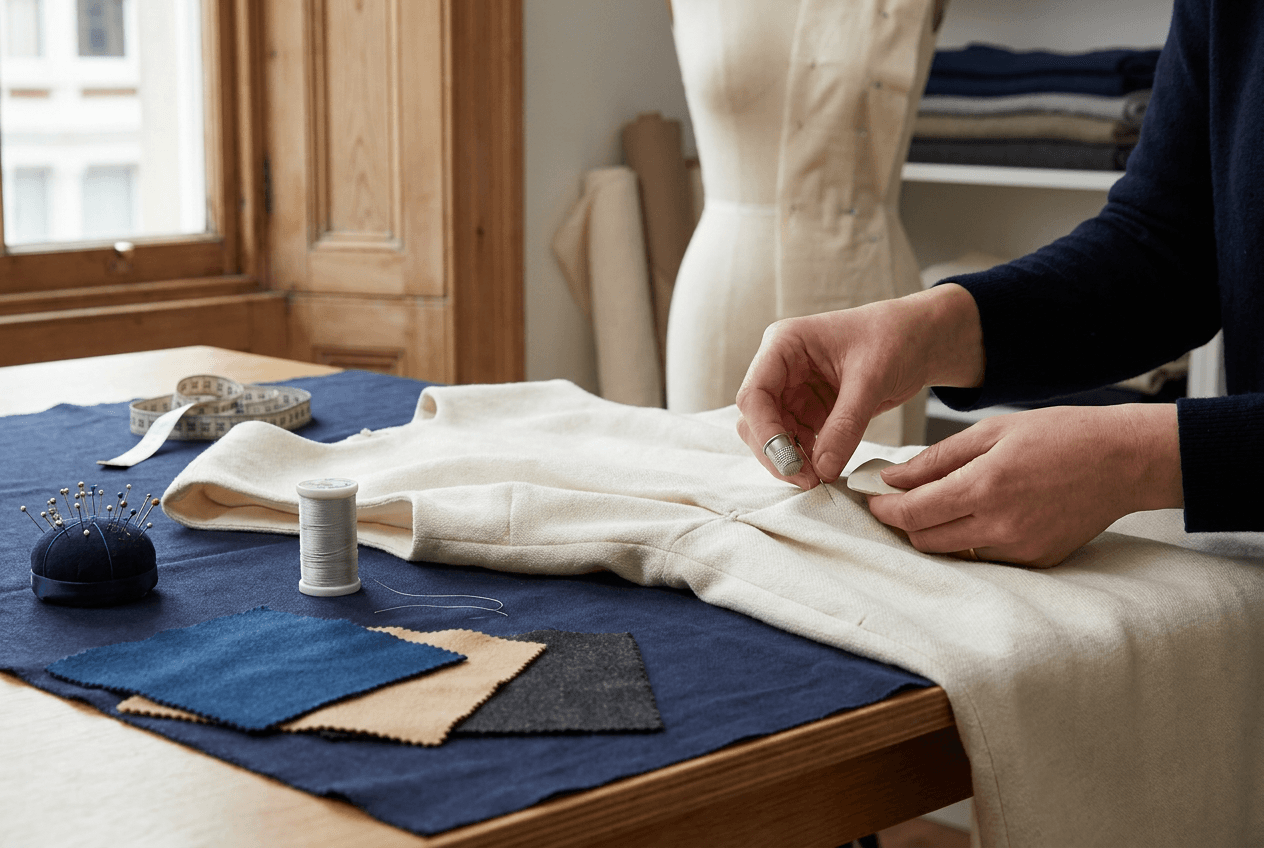
Formal clothes expose poor guesses more quickly than everyday pieces. Boning, fitted waists, shaped seams and layered cloth depend on balance across the whole garment. When one point moves, the hem, neckline or sleeve can move with it. Fabric weight, weave and intended ease therefore matter as much as the size on the label.1,6
Use a staged fitting method
Treat the purchase and alteration as a sequence. Choose the garment, establish a baseline fit, review it midway, then make the final adjustment close enough to the event to reflect the body you will actually dress. This gives the tailor information at the moment it becomes useful and avoids spending the entire alteration allowance too early.